Sustainability

The Climate Club believes sustainability can be achieved by living an environmentally friendly lifestyle that will not over-exploit natural resources and make unnecessary waste.
According to the United Nations World Commission on Environment and Development,
“Sustainable development is the development that meets the needs of the present without compromising the ability of future generations to meet their own needs.”
Sustainable practices support ecological, human, and economic health and vitality, and they presume resources should be used conservatively and wisely because they are not infinite. It’s about creating an equilibrium between human production and the living world.
Start Reading

The closure of Merrimack Station is a testament to the power of environmental activism and public pressure to change the energy landscape. As the region strives for sustainability, wind emerges as a leading clean energy source.

The transition to a low-carbon world is not without pushback and criticism. Fighting climate change by reducing carbon emissions is important, but it could have a negative impact on employment and the economy. In order to address the unease among workers, it is important to validate worries, and identify strategies and solutions- ensuring a just transition where no one is left behind.
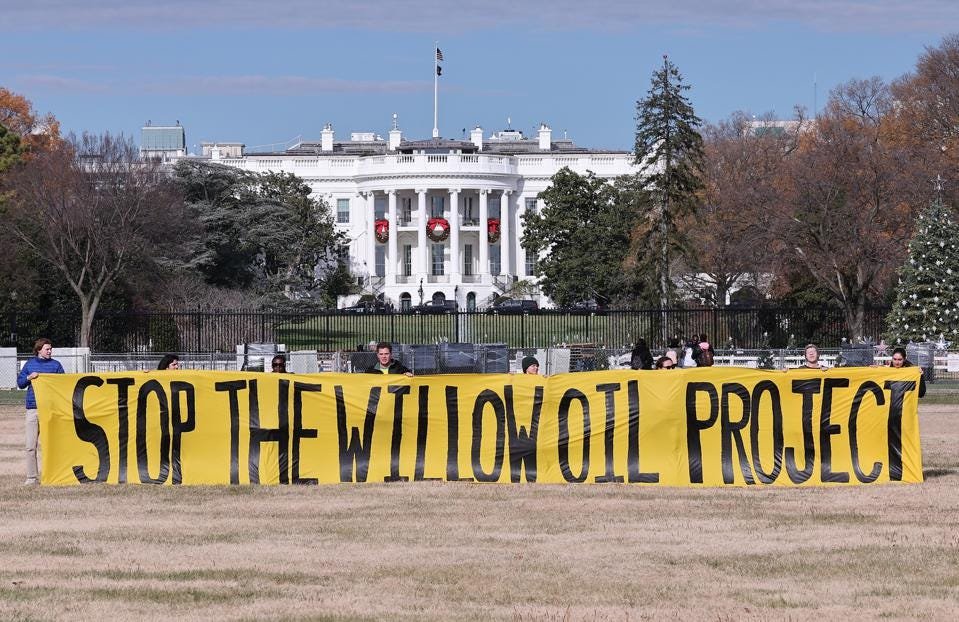
On March 13, the Biden Administration approved the ConocoPhillips Willow Project, a move some organizations are calling a “carbon bomb,” allowing thirty years of oil and gas extraction in Willow, Alaska. But what does the Willow Project involve, and why is it so controversial?

On March 4th, following almost two decades of discussion, the members of the United Nations (UN) came to an agreement on marine conservation in the high seas. But what makes this such a historic agreement, and what does it mean for the future of marine conservation?

In December 2022, the biodiversity-focussed 15th Conference of the Parties (COP15) adopted the Kunming-Montreal Global Biodiversity Framework (GBF), bringing the focus back on nature and putting our planet first. But why is biodiversity loss a problem, and what does the GBF hope to achieve?

On November 20th, 2022 at the 27th Conference of the Parties (COP27), it was announced that a loss and damage fund will be utilized for countries at the forefront of the climate crisis. But what does this mean, and is this fund a truly “ground-breaking decision?”

On November 15, 2022, the global population reached 8 billion people. While reaching this landmark is associated with improved public health, nutrition, and medicine, there remains concern that the growing population exacerbates vulnerability to the climate crisis, and threatens sustainable development.
The Supreme Court agreed to hear a new case, Sackett vs. Environmental Protection Agency, which was argued before the court in early October 2022. The case concerns the Clean Water Act, specifically the provisions it makes (or does not make, as one side argues) for wetlands within the United States.

Personal vehicles, buses, light rail, and heavy rail produce about 0.96, 0.64, 0.36, and 0.22 pounds of CO2 per mile, respectively, but what other choices do Americans have to get around town? For many people, a humble alternative exists in the bicycle.

On Friday, October 7th, the entire electrical grid of Greece ran completely on renewable energy for about five hours. The Mediterranean nation of just over 10 million has a renewable grid mix of solar, wind, and hydroelectric power. It was able to sustain 100% of the country’s electrical needs for a short period, highlighting the progress it has made in the alternative energy space.